A tiny telescope, a distant system
Uranus lies billions of kilometres away. Detecting its satellites demonstrates how much faint detail can be recovered from modern compact imaging systems.
Uranus appears as a tiny distant world through a small smart telescope. But look carefully around the planet and something much more interesting can appear: its moons.
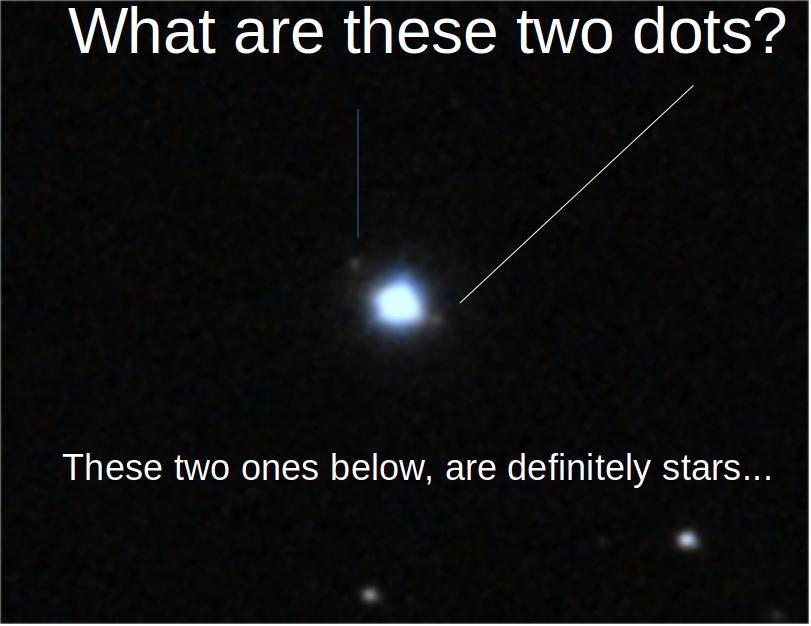
Uranus is one of the most distant planets that amateur astronomers regularly image. In a Seestar S50 observation it appears very small, but the important information is not necessarily confined to the planet itself.
The first image confirms that Uranus was successfully recorded. The next question is what else is present in the surrounding field.
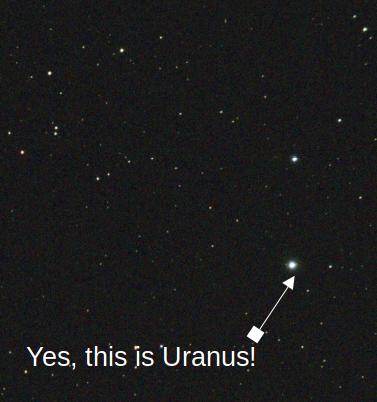
After enlarging the image, two small points became noticeable close to Uranus. They could be moons — but a point of light in an image could also be a background star.
The observation therefore needs another step: compare the positions in the image with an ephemeris.
The theoretical satellite positions for 31 August 2024 at 02:28 UTC were compared with the telescope image. Drag the divider to move between the predicted and observed views.
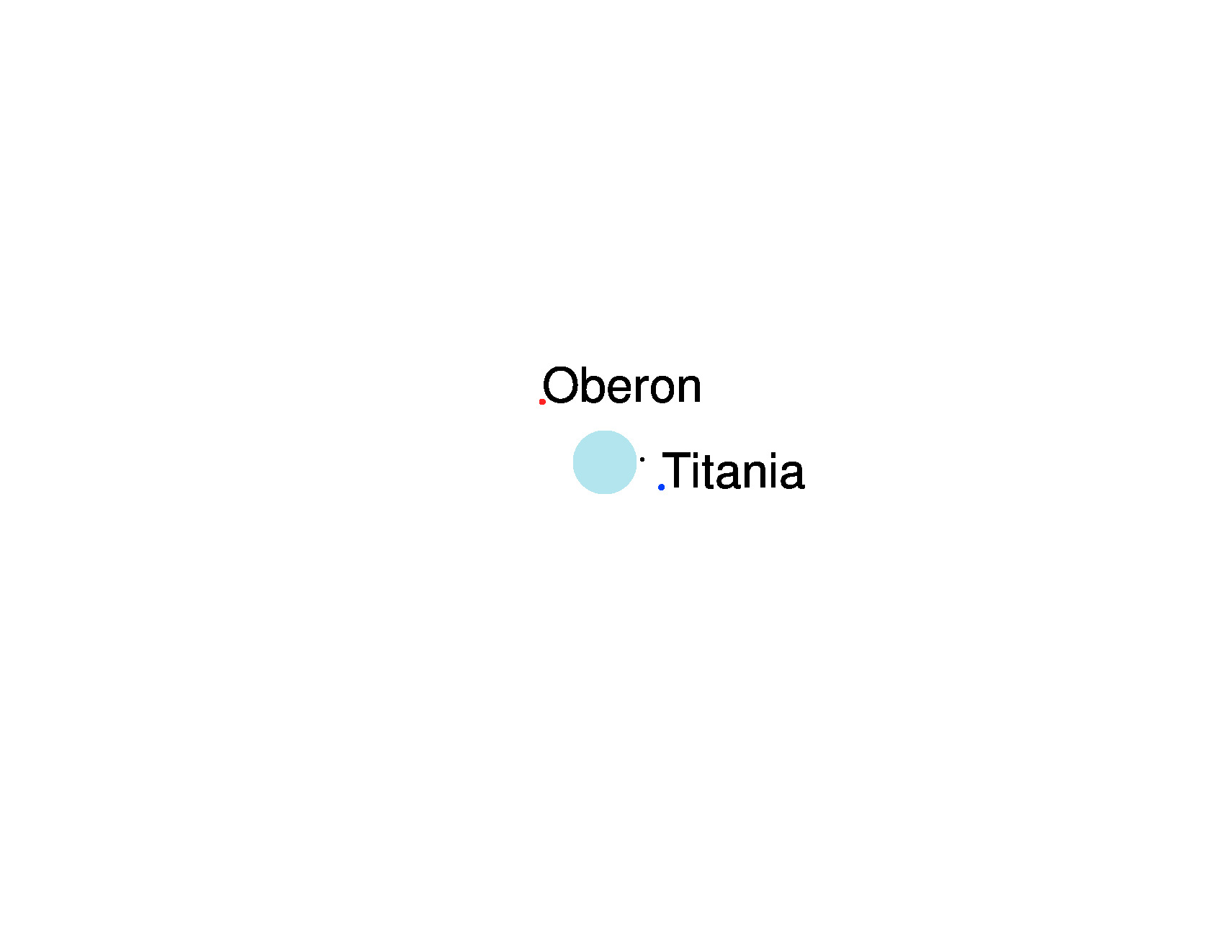
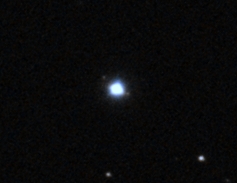
The relative positions of the two faint objects agree with the predicted locations of Titania and Oberon. That makes a much stronger identification than simply assuming that every faint point close to Uranus is a moon.
Uranus lies billions of kilometres away. Detecting its satellites demonstrates how much faint detail can be recovered from modern compact imaging systems.
Astronomy is not just about recording a dot. Position and timing provide the evidence needed to decide whether that dot is actually a moon.
Image Uranus on another night and the moons will have moved. Comparing successive observations makes their orbital motion directly visible.
If you have an image containing a planet and possible satellites, use the planetary-moon identification experiment to investigate what you recorded.
Comments