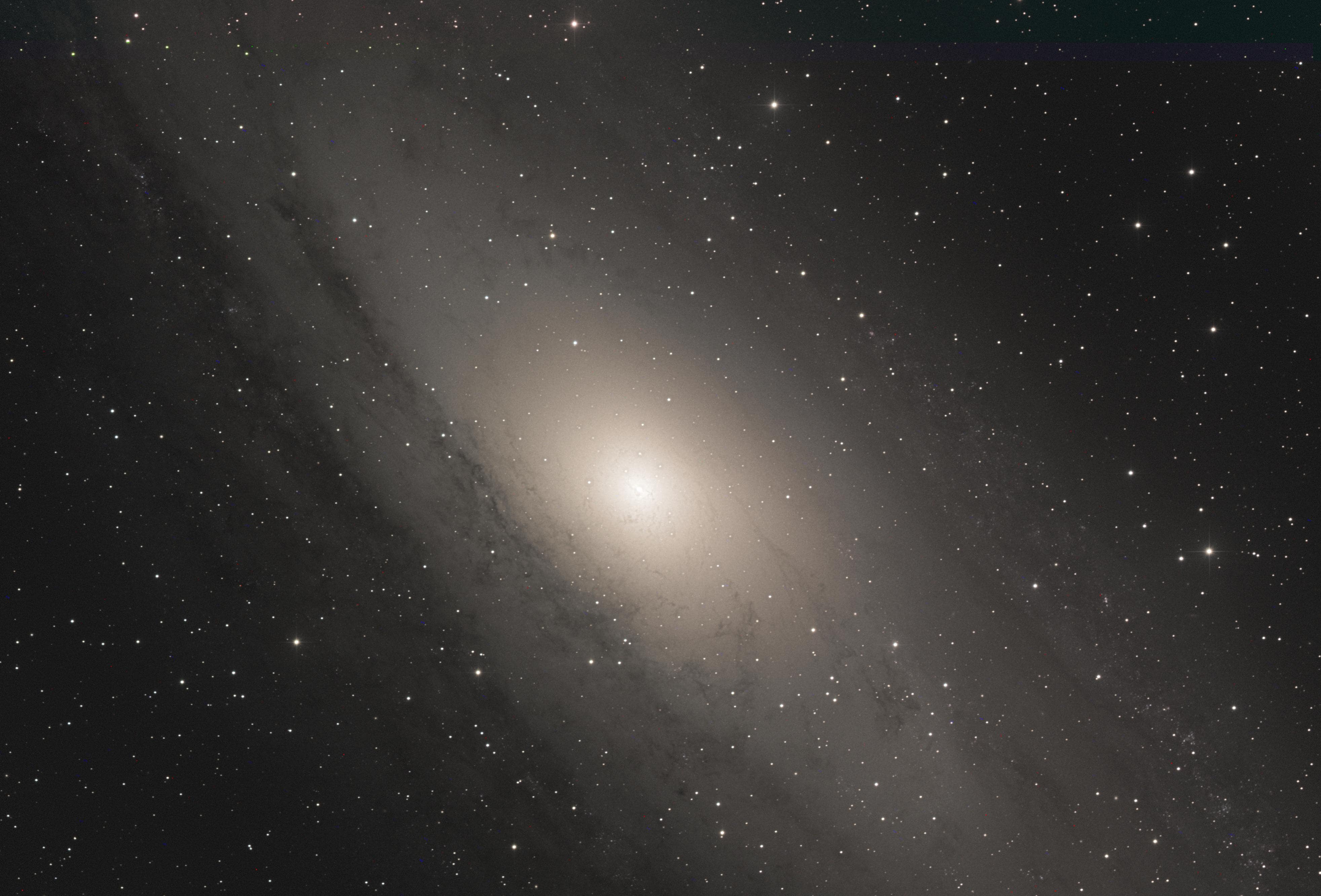
M31 · Andromeda
The nearest major galaxy to the Milky Way, around 2.5 million light-years away.
Charles Messier wanted to discover comets. Instead, he created one of astronomy's most famous catalogues — a collection of galaxies, nebulae and star clusters that observers still explore more than two centuries later.

In 1758 Messier encountered a faint, cloudy object in Taurus while following a comet. Unlike a comet, it did not move against the stars. That object became M1 — the Crab Nebula — and helped inspire a list of other stationary comet-like objects.
The Crab Nebula becomes the first entry in what would develop into Messier's catalogue.
By the end of Messier's life, the published and compiled catalogue associated with his work contained 103 entries.
Later historical work expanded the accepted Messier list to the 110 objects recognised today.
Messier could catalogue how an object looked and where it appeared, but eighteenth-century astronomy could not yet reveal the true nature of most of them. Today we know that the catalogue mixes several very different classes of object.
Vast systems containing stars, gas, dust and dark matter. M31 and M51 are famous examples.
Relatively young, loosely bound groups of stars such as the Pleiades, M45.
Dense, approximately spherical collections of old stars. M13 is one of the best-known examples.
Clouds of gas and dust with many different origins: stellar nurseries, planetary nebulae and supernova remnants all appear in the Messier catalogue.
Choose a category and then select an object. These examples alone show how extraordinarily varied Messier's collection turned out to be.
The nearest major galaxy to the Milky Way, around 2.5 million light-years away.
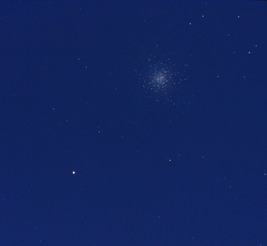
A dense globular cluster containing an enormous population of old stars bound together by gravity.
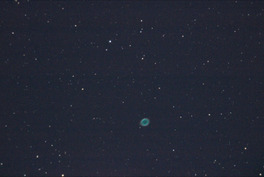
A planetary nebula: glowing material expelled during the late evolution of a Sun-like star.
The Andromeda Galaxy is approximately 2.5 million light-years away. That means the light reaching your eyes tonight began its journey roughly 2.5 million years ago.
Although M31 appears as a faint patch to the unaided eye under a dark sky, photographs reveal a huge spiral galaxy. Its apparent extent on the sky is several times the diameter of the full Moon, although its faint outer regions are difficult to see visually.
Around March, the geometry of the night sky makes it possible from favourable northern latitudes to attempt one of amateur astronomy's classic challenges: observing as many Messier objects as possible between dusk and dawn.
A complete Messier Marathon aims for all 110 objects. Success requires dark skies, careful planning, a favourable Moon phase, rapid navigation and — usually — quite a lot of coffee.
Comments